Wet Wall vs Tile: The Honest Comparison Nobody Gives You
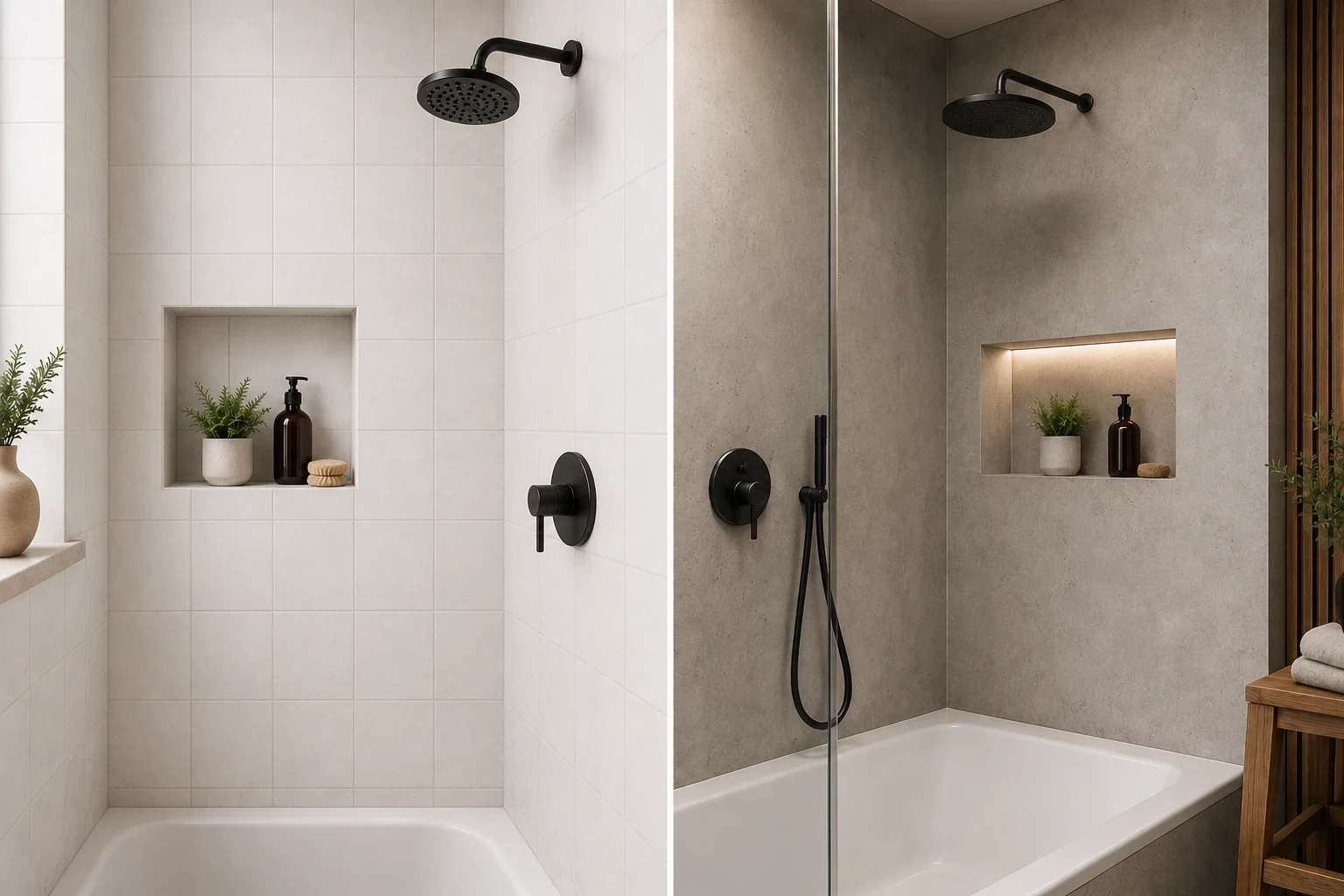
There's a bit of snobbery around tiles in bathrooms. The idea that tiling is the proper way to do it and wet wall is the cheap shortcut. That used to be a fair take. It really isn't anymore. Panels have moved on a long way in the last decade, and the gap between the two has closed in ways that surprise most people when we walk them through it.
What People Don't Tell You About Tiles
The tile itself can last 30 to 50 years with proper care. That's the figure everyone quotes. What gets left out is the grout. Grout in a wet area needs resealing every six months to two years depending on use. Regrouting tends to come round every 8 to 10 years in a shower. Grout discolours, cracks, lets water through if you ignore it. That's not a tile problem exactly, it's a tile-system problem, and the tile system is what you're actually buying. Most people don't stay on top of the maintenance for two or three decades. Most get six or seven years in and start thinking it's seen better days.
What Modern Wet Wall Actually Is
Wet wall is a different animal entirely. A modern panel is a continuous waterproof surface with no grout lines anywhere. The seams are sealed with sanitary-grade silicone, which we use plenty of because that's how you get a proper watertight finish. Nothing porous for mould to get into, no grid of joints to scrub, no resealing schedule to keep on top of. We stock well over 100 styles in the Irvine showroom, from PVC-based panels to solid options like Kerradeco. Lifespan on a good panel sits at 15 to 20 plus years, and premium composite panels often come with lifetime guarantees.
Cost, Time and Living With It
Install time is the big practical difference. Tiled bathrooms usually need 2 to 3 days of fitting before you can use the room. Wet wall typically goes up in 1 to 2 days. If you're trying to minimise the time your bathroom's out of action, that matters. It's also one of those things people get wrong, along with a few others worth knowing before you start. Cost-wise, panels usually work out cheaper across a full project once you factor in labour. Tiling is skilled, slow work. Panel install is quicker and needs less specialist time. Materials can go either way depending on what you're choosing.
The Look, and Where Tile Still Holds On
The aesthetic argument used to favour tile. Now it doesn't. Modern panels come in marble, stone, concrete, fluted, gloss, matte, woodgrain, and yes, patterned, hexagonal and mosaic-effect finishes that genuinely hold their own next to designer tiles. The old idea that panels mean a flat plain wall is years out of date. Tile still has a niche though. If you've got an awkward layout with curves and odd angles, tile adapts more easily. If you're chasing maximum resale value in a particular high-end property, tile can still carry a bit of prestige in certain markets.
Most bathrooms aren't those bathrooms. For the average UK refurb, panels do the job better, faster, and with less hassle. Come into the showroom and we'll walk you through the range.